Building a Family Emergency Plan, One Kitchen-Table Conversation at a Time
Storms, fires, outages and evacuations: a calm, step-by-step way to get your household ready without the overwhelm.
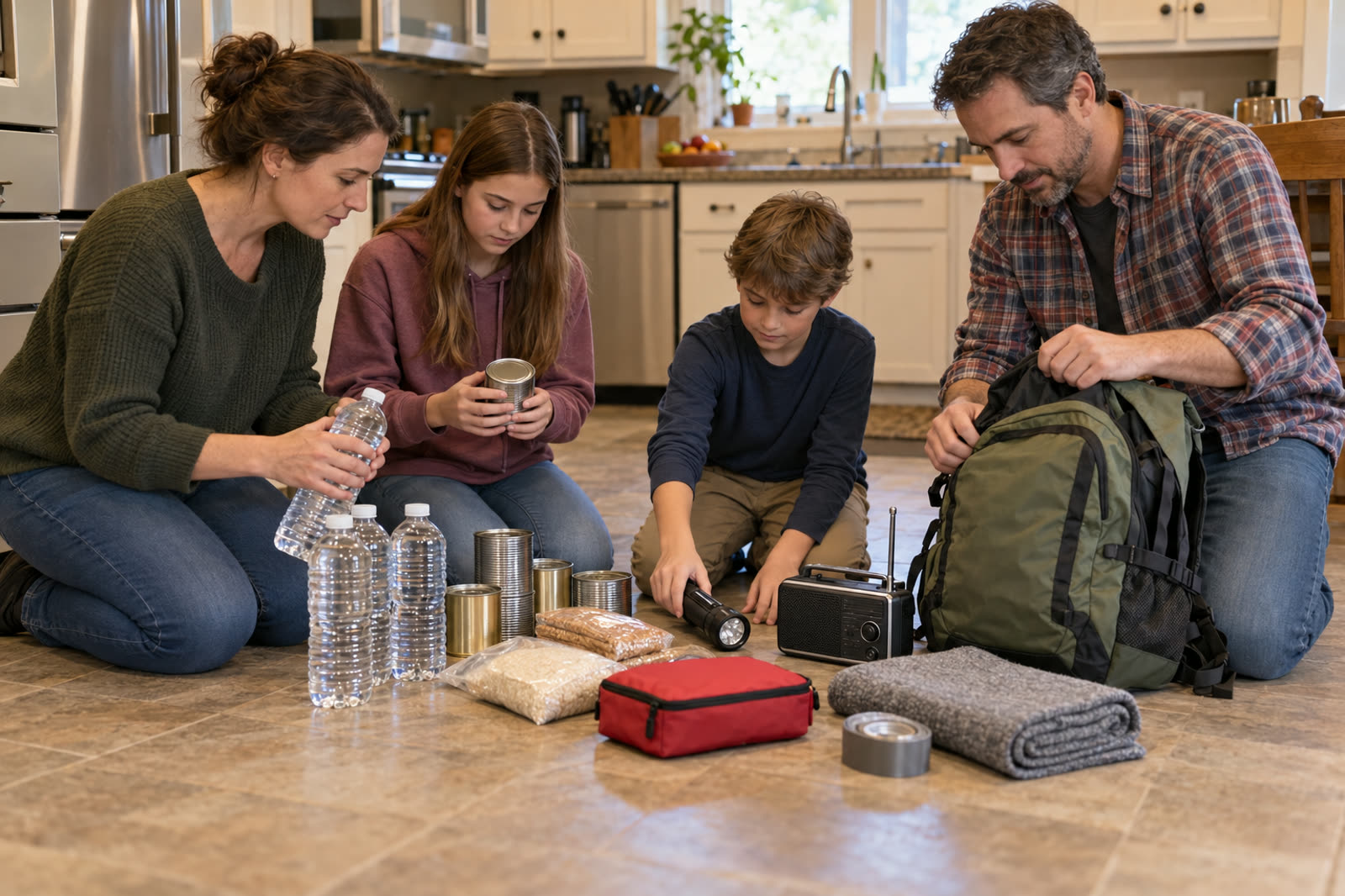
Emergency preparedness can feel overwhelming. There is always one more item to buy and one more scenario to plan for. But a solid family plan doesn’t require a bunker or a garage full of supplies. It requires a few conversations, some basic supplies and a little practice. The best plans are simple enough that every member of the household, including the youngest, can remember them under stress.
Here is a step-by-step approach you can complete over a few evenings at the kitchen table.
Step 1: Know your likely emergencies
Start with what is realistic where you live. Coastal families think about hurricanes and flooding. Others plan around wildfires, tornadoes, winter storms, earthquakes or extended power outages. Every household should plan for a house fire. Your local emergency management office usually publishes guidance on the hazards most relevant to your area, and signing up for local emergency alerts is a quick first win.
Step 2: Plan how you will communicate
During an emergency, family members may be at work, school or elsewhere, and phone networks may be overloaded.
- Pick an out-of-area contact. A relative or friend in another region can be easier to reach than local numbers, and everyone can check in with that person.
- Write numbers down. Phones die. Keep a small printed card with key contacts in every wallet and backpack.
- Prefer text messages. Texts often get through when calls do not.
- Know the school plans. Learn how your children’s schools handle emergencies and reunification.
Step 3: Choose meeting places
Pick two:
- Just outside the home, such as a specific tree or a neighbor’s mailbox, for sudden emergencies like a fire.
- Outside the neighborhood, such as a library, house of worship or relative’s home, in case you cannot return home.
If you may need to evacuate, know more than one route out of your area, and decide in advance where you would go: a relative, a friend or a hotel further away.
Step 4: Build your kits
Most families benefit from two kinds of kits.
A stay-at-home supply
For outages and storms when you shelter in place. Common guidance includes:
- Water: a commonly cited guideline is one gallon per person per day, for several days.
- Shelf-stable food your family will actually eat, and a manual can opener.
- Flashlights and extra batteries; avoid candles where possible because of fire risk.
- A battery or hand-crank radio for news when power and internet are down.
- A first aid kit and a supply of essential prescription medications.
- Supplies for babies, older relatives and pets.
- Phone chargers and a portable battery pack.
A grab-and-go bag
For evacuations. Keep a lighter version in a backpack: water, snacks, a flashlight, a first aid kit, medications, a change of clothes, cash in small bills, phone chargers and copies of important documents.
Step 5: Protect important documents
Gather copies of IDs, insurance policies, medical information, property records and key financial details. Store originals in a fire-resistant container and keep copies in your grab-and-go bag or in secure encrypted digital storage. Photographing or filming the contents of your home can also make insurance claims much easier after a disaster.
Step 6: Know your home
Make sure the adults in the household know how and when to shut off water, gas and electricity, and keep any needed tools nearby. Note that once gas is shut off, a professional typically needs to restore it. Test smoke and carbon monoxide alarms monthly and replace batteries on a regular schedule. Keep fire extinguishers where they are easy to reach, and make sure upper-floor bedrooms have a way out, such as an escape ladder.
Step 7: Plan for everyone
A good plan accounts for every member of the household: an infant who needs formula, a grandparent who uses a walker, a family member who relies on powered medical equipment, a pet that will need a carrier. Write down medications and doses. If someone has specific needs, consider registering with local programs that assist residents during emergencies.
Step 8: Practice
Run a fire drill at home at least twice a year, including at night. Practice your out-of-area check-in by text. Walk the route to your neighborhood meeting place with your kids. Practice turns a plan on paper into something your family can actually do.
Step 9: Keep it fresh
Pick a recurring reminder, such as the change to or from daylight saving time, to rotate food and water, check expiration dates on medications and first aid supplies, update contact cards and review the plan together. Children grow, phone numbers change and families move. A quick review keeps the plan current.
Key takeaways
- Plan for the emergencies most likely where you live, and always for a house fire.
- Choose an out-of-area contact and two meeting places, and write key numbers down.
- Build a stay-at-home supply and a lighter grab-and-go bag.
- Practice the plan with the whole family and review it on a regular schedule.
This article is general information, not legal advice. Laws vary by state and change over time, so check your state’s current rules with the appropriate official sources, and consult a qualified attorney about your specific situation. Home Guard Journal may receive compensation from partners featured on this site; see our Advertising Disclosure.